


I reach for his hand on our way out the door; we move down the hillside together toward the lake. Then his hand is clearly partners with mine through the dark. Lights like white birds oscillate on water. A delicate rank smell of unseen flowers in the blackness. We pass an abandoned streetcar kiosk, silent streetlights at long intervals, and some sand, always with clasped hands, until we return to the place where the lake first opened to us.
Lying on the rug in his parents’ living room, side by side, kisses that taste of violins, of French words I don’t understand, obsessively sweet kisses, penetrating. I want only to kiss him hour after hour. He takes off his glasses with a boy’s dignity and sets them on the floor beside us to rest like a clock, or like a guardian watching over us. Lying on him, pressing closely against him.
On the edge of a hill under a water tower with stone figures holding swords, he tells me he loves me. If the rose-colored sky and hectic night air would keep us! His long kisses twist tears of foreboding from me that fall on my hands.
In some alley he takes me by the shoulders, presses me against the brick wall, and kisses me hard in the rain.
Lying side by side on the parlor floor of the family where I am au pair girl. I ought to have come in through the servants’ entrance and gone right up to my freezing room in the attic, but instead I lie with him in front of a fireplace; there is a suit of medieval armor in the corner disapproving of it. The thing I keep on always is my blue silk underpants with lace edging. We play this game like writhing snakes until he half slips inside me and I start to come, throbbing, defeating the suit of armor in the corner and the evil room in the attic. Next day after that I wear my hair a new way and turn up the collar of my thin wool coat, very importantly.
At school he sleeps on the top bunk of a metal bed; this night no one is there but us, and instead of going home at curfew we are writhing again, desperately. It is not really me that does it—my pelvis striking out, stabbing his—and it is in a careless moment, sick of goodness, that I land myself in-him-in-me. What wanted this? What snake of me rips out that first blood?
Holding his face, tracing the line of his mouth, saving his proud, aristocratic face, younger in disappointment.
A rusty faucet drips, and dust motes stand in light seeping from under the shade. The huge house is quiet—so quiet that a tenant walking across linoleum is as a fingernail drawn on a harp string. He does not play the stillness at all but forces me, and what I had waited for so long is now just a thing to be waited out. The sound in his throat as he arches his back is as of some old injury, but I am silent. Finally I say, “If you’re waiting for me, don’t,” knowing I have already said good-bye.
We are sitting on the floor, drinking tea, listening to Mozart when he kisses me the first time.
I like to put my hand on his thigh when he’s driving the car. Making love, he’s in charge of the earthly velocity of the whole; I am still as if resting my hand on his thigh while he drives. He is the master of experience—even ours.
But one night he picks up a circus toy in his hand and speaks to me with it; he waves its tin arms, prances it, telling me in a sibilant mouse-voice the secrets of circus life. After this I am in love with him.
It is hard to get used to the way that when his heart is open and I want him is when he does not want passion.
So much of it takes place in darkness. Dark as caves, slithering, gliding, running my hands through his long hair so dry and coarse to the touch it seems to go up in flames inside my fingers. Everything he says in the language I don’t understand seems prophetic. Everything he does to me with his prehensile fingers was invented by angels. For this reason I am never tired of tasting every millimeter of his body, from the inside of his mouth to the spaces between his toes.
I lie on the high white iron bed and, standing beside it, he pulls my thighs upward and comes into me like a panther devouring a crane, and this must be something I wanted since I was born.
We make ourselves get out of bed at nightfall, go out and dance so we’ll stop making love. We may die of it. So this is how it is. This pathological enchantment was possible to me all my innocent years. We get dressed to eat watermelon with tiny ivory knives, in the hotel. Then we get undressed and make love again.
Standing on the balcony in a silk wrapper I smell guava juice from the dusty street; children who run laughing below wave to me, old men bow to my long hair, I hand money to young prostitutes on the street hoping it helps buy their freedom, and everything that is alive is my family, all because of utter erotic happiness.
For this I would join an army to be at his side. In fact I do. It might take a lifetime to understand the cost of losing my babies in a war like that.
Because of his eyes, the shape of his lonely arms, because of a certain courage in him that makes him my man . . . because of these eyes and that courage I will even go without sex a year at a time for the wild sweetness of being with him.
One day he will betray me and there will be no more sweetness, no courage to die for, only the price that was paid, but I will never forget our darkness, the hunger that turned to a feast of crazy-eyed saints.
Only the one time, and more like screwing a polar bear than anything else, but a good time that is in a pine-smelling loft, and I come a long while without any shame, in the arms of a stranger who bites my collarbone as he goes off, nipping out a little piece of my flesh, and to this day the scar carries no regret.
I take off the bath towel and lay it carefully on the bed in the dark. He says, “You can stay tonight if you want.” We turn to each other and the length of him against me is sudden sea spray—that clean, shocking and unexpected. His fingers on the back of my neck, he traces my ribs with his other hand intently. His mouth on my breast is like a decision between us. Even though he cries out with happiness, it’s too new for me to respond. But when he pulls away at the end without even touching my face the emptiness is as standing on a railroad track in the rain.
The other time begins with a harsh argument of his, “Don’t screw my brains out—I have to get up in the morning.” Not true, but I go to bed in the next room. After a few minutes he switches on the light and snatches the sheet from me. “What are you doing?” I laugh not believing; he pushes me down on the bed but stops, a victim of amnesia. I ruin it by saying I like him: meaning the other him, the one of oceans and glad cries. There follows a soulless act of fornication which I nevertheless am just beginning to appreciate when he stops miserably. I don’t let him; another minute and I’ll climax, even if it’s only a shred of memory off that first time. He pulls away and again there’s a shapely finality in which I can see lights of some far away oil refinery, as I stand on hard rail tracks in rain. He says my name with peculiar tenderness, then goes back to the other room.
The viscous dark is a mask leaning on my face, and I am aware of the tarantula in the corner, bobbing on hairy legs. He tells me it can’t get out of the bottle, but I feel it always watches him and is watching us now.
A single sound from him, like a boat’s creak, talks of months he’s spent alone at sea. His hands, thin and rough, have a satisfying gentleness running over me. He releases urgently and from his ribs I seem to get some of his loneliness, some warm toughness: some of his indifference to the tarantula in the corner.
It must be the black suit, broad shoulders, and sharp Polish face, then the dignified way he holds my hands all the way through a Shakespeare play. When we whisper, there’s a faint, lovely smell off his neck.
Stripping to our waists in his apartment has the same texture, European movies, but no: it’s over in seconds. Why am I singed to the bone with anger? Because black suits and Shakespeare could pull me to this? Or because his thin, army-muscled hips are so hard it makes me feel brutal?
It starts with a perfectly shined red motorcycle, and when I wrap myself around him, he is always careful to drive fast but not too fast.
When he kisses my neck I am a purple iris dissolving. He can stay inside me for hours while I come over and over again, handfuls of his black hair crushed between my fingers. But early one morning as he drinks coffee in the kitchen and I admire his beautiful green-veined arms, I notice he has track marks. He lies to me about it. I then understand why he’s always changing apartments, has no phone; and I slowly break into a sweat that is salt enough to wash him out of my life without even telling him.
I wait through a long strange, beautifully lit German silent movie until his hand clasps mine. Then in the tiny projection room up winding stairs, his hands all over my waist, hips, breasts in authoritative seizure. And the heat off him powerful as deep earth’s burn.
I sit on a car hood, arm round his shoulder as a sister’s, and he weeps and talks of a struggle that calms my soul toward his. In my tiny bed, with sunflowers pressing, shuddering quietly against the screen, a full moon just behind them, he says to me, “I want to love you all night.” And later, “I wanted to be so gentle for you, I wanted to make it last so long.” Lying beside him not sleeping I stay, arms round each other’s necks, darkness and sunflowers suffusing my blood, until dawn.
Come to me, changing moon, come to me, shooting star. I look in your eyes, I love you. Come, heart, let me not go toward an empty sky, let me sink deep and rich in my steps, as a deer running in snow, as she is, she, my womb, that in birth and in love is my home. . . .
Just out of range of moving traffic we stand—my arms round his neck, his hands in the hollow of my waist. He says in a low, challenging voice, “If you give me any more we’ll be here all night.” I laugh and kiss him anyway. When he bends lightly, cradles my neck in his hand, my summer dress slides on my calves, soft as grass. My feet feel stronger than they are, standing in the street this way: or I didn’t know my strength standing in this street.
“What was that you said? I liked that.” I begin humming his phrase.
He says, “I didn’t know you could sing. Stay right there.” His guitar lunges out of its case. That first song of ours only takes ten minutes to finish. It isn’t very good, but we laugh like we could drive dust out of his apartment. The second, fifth, seventh songs are also vain, stilted and derivative, but we wisely practice them in private, so we think they’re supreme.
The tenth song is good. By the tenth song we’re making love in the shower, calling each other twice a day, and I slice vegetables his way. His crude, cheerful openness about erotic facts has promising effects on my own expressiveness. He’ll say, “Just get on top, baby. I love to watch you. I can stay hard an hour and a half that way. No man ever got as much happiness out of sex as you do! Teach me how you do it.”
I love to watch him too. His eyes combust, and he never fails to say my name at climax. The only thing I miss is that he’s so clean he has no smell. He can’t keep his hands away from me. For some reason it makes me feel loved. His hands are always grasping, tapping, squeezing, pulling, kneading, or holding me. My hair, mouth, breasts, shoulders, hips. For hormonal reasons, to comfort, make friends, or make a point. In a photo taken at an outdoor concert, his ankle twines around mine. Even his breath on me as he talks, revealing any emotion that happens to him, touches after it’s past.
His sense of adventure and mischief haven’t matured, and this gives the sadness in my loins something to forget itself by. “Let’s find out how many orgasms you can have at one time. Let’s read ancient Chinese books and try weird sexual positions. Let’s write another song.” Satiation is unknown to him. Nevertheless we have a solemn pact, because of his scientific beliefs about the depletion of masculine fluids, not to have sex more than three times a week. This discipline creates thrilling states of tension. Will we break the rules? One night after dancing for hours we make love three times straight, and are able to play out many poignant budgetary dramas, having used up our quota for the week.
Mariposa blossoms, strange grocery stores with pickled chili and canned lichees, martial arts forms. We spend a lot of time on these. Shopping often leads to movies. I find myself waking at three a.m. with exciting ideas. I find the confidence to change jobs. Some of the things he says are so funny I write them down. Years will pass before I find out they weren’t even funny.
He insists I do breast exercises and vaginal contractions every day. “How do you expect to stay this great in bed if you don’t maintain your equipment?” I discover he’s right. We are thorough and academic about ecstasy. “Do you like this?”
“I love it. An eighth of an inch lower, please, there. Yes! Yes!”
“The music’s getting too symphonic.”
“I’m turning it off.” Almond-tinctured body oil, back massage, flannel sheets. When separating for work travel, one of us records the sounds of our passion to send along. Worthy addictions.
Suddenly I make more money. My friends smile a lot. Colors, geology texts, and the details of my morning walk are fascinating. My last illness was a minor ear infection. Can a human being’s bone marrow feel this good?
But where is the stone water tower with its soldiers and swords to keep us safe? Where is the red sky that guides hearts? I don’t see them, don’t hear promises. No contract in the radiance that home is . . . only the history of this that I tell you.
It is the history of a song. And it takes a man who just can’t keep his hands off me to sing that song.

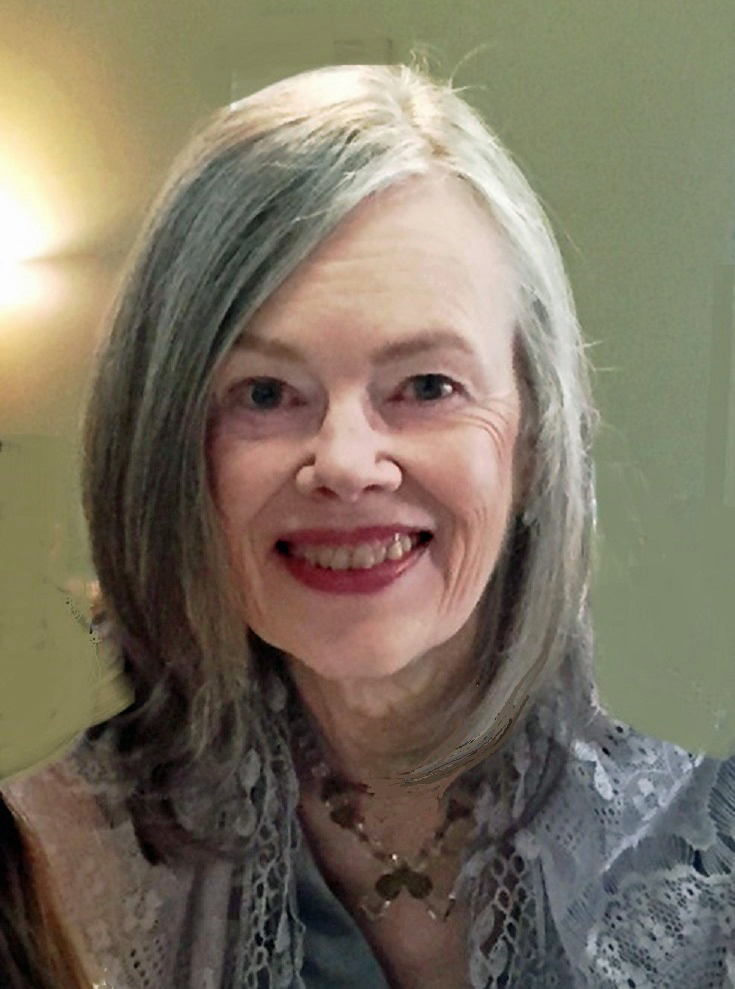
Mia Kirsi Stageberg, a fiction writer who started out in the New Directions annuals, lived in widely disparate cities and a few countries before falling hard for San Francisco. She’s worked in nonprofits and as an art writer, oral historian, researcher, and cloth sculptor. Stageberg’s thirteen books and chapbooks include her first published novel, Candles, from Beatlick Press 2014. She loves living in Japantown, San Francisco. Her Norwegian last name’s pronounced STAH-ga-berg. To see more, visit her on Amazon.
–Art by Milan Vopálenský & Esmahan Özkan