March 28th, 2013 § § permalink
On the themes of Your Very Flesh, Rivers, and Salt
Handyman
Our house turns thirty-five this year. At thirty-five, most women glow. Not so
this dowager we own. At thirty-five, she’s come undone;
her ceilings peel, streaked windows stick, their sashes grimed, cracked tiles tilt,
our feet career like drunks’ across this ever-shifting plain.
This winter, rain upthrusts back steps above the rusted transom’s height. We eye
the pool, its leaf-strewn scum but cannot skim the brown from blue
without a trudge around the house, which often seems too hard to do. The leaves
increase; the back door mocks, its bottom snags against the rock for weeks.
This morning, when I supplicate, my spouse agrees to bend and break the grip
of stubborn stone that blocks this exit from our home.
Of solitary temperament, he gathers up the implements and toils all alone.
His white hair dulls in clouds of dust, hands chalked, face ghosts behind the glass.
He spins the disc against the heaving rock. He swears and sweats, yet wears no mask
amid this whirling sand and grit. He hates to fix this broken place,
convinced he isn’t clever with his hands. He throws aside the mask I find, breathes deep
as milky particles mix toxic swirls beneath a muted sun.
It’s true he is not dexterous. I listen to him grunt and cuss, feel guilty sipping coffee,
sitting down.
To tamper with this doorway is another job he thinks he’ll fail. This notion settled deep
inside in childhood, it controls him still.
His lungs ingest the specks he breathes. He lights a smoke, and he breathes deep
because it makes this job he hates a different job, a calling he’s embraced:
No love, no sense of victory, can change my husband’s entropy. He labors hardest
in his lust to downsize to a maintenance-free grave.
Storm
Nimbus drape their bulk over the bluffs and growl. A body
is transformed by purpose into muscle and sinew.
She maneuvers over rocks to embrace the onrushing storm,
gone too far to retrace the steps that led here. The summit
peaks just ahead. She rises, a white flag above the Mississippi.
Fingers peel and discard rags of the past, tatters of colorful cloth
slide away on the wind. A wedding ring rattles down the slope,
plunges through the water below. She teeters, naked on the cliff edge,
wild sky black. Arms spread, she dives through the terrible rain.
Playa Encanto
The first morning we wake, trucks shower water
to bind the red dust to the road. Only beach grass
and ice plant survive on the bluffs of Encanto.
We unpack our suitcases, boxes of food,
then begin our ritual walk along the sand.
Danny spies a shimmering shape near the water.
Moving closer, we see a baby dolphin rocking
in the swell, its mouth full of bacterial scum. It rolls
on the tide. An open eye points to heaven; its neck gapes,
slit by fishnet or gaff. Perhaps it was Alejandro
with the golden incisor who sells knock-off Brighton bags
when shrimp aren’t plentiful. His stall on Calle Principal
offers shell necklaces and strings of sea horse cadavers
at a very good price. Steel-blue skin peels from the slash.
Color shines from the revealed gash: yellow, almost pretty,
like the guayaba we slipped between our lips at breakfast.
Its belly oozes a second wound, sculpted like a smile.
Danny drops his skim board and gentles the body
onto higher sand. Entrails slip from the slit and whirl
in the surf. Blood christens Danny’s beach shoes
then is washed away by the waves. His face turns
from me: a little boy who thinks he’s too old for tears,
with questions to ask, but answers aren’t easy.
We float the baby back to deep water, bury it
beneath Encanto’s waves.
Author Biography
JP Reese has poetry, fiction, creative nonfiction, book reviews, and writer interviews published or forthcoming in many online and print journals including Metazen, Blue Fifth Review, and The Pinch. Reese is Associate Poetry Editor for Connotation Press: An Online Artifact, and a roving editor for Scissors and Spackle Cervena Barva Press has scheduled Reese’s second poetry chapbook, Dead Letters, for publication in 2013. Her published work can be read at Entropy: A Measure of Uncertainty, jpreesetoo.wordpress.com.
March 25th, 2013 § § permalink
On the themes of Gratitude and Rivers
Ode to Crohn’s
Let us pretend,
my devoted companion,
that it’s not I who have you
but you who have me:
that you’re the man and I
am the disease
that shaped you
in ways only a god can,
out of some rough thing
as ordinary as a stone,
for who wouldn’t ache
to understand such power
how, like a universe,
you could not even exist
and then—bang!—suddenly be
steersman of all my thoughts
and movements, engineer of
only my most constructive agonies,
divine architect of my dreams,
scattering myriad ulcerations like worries
as persistent as the stars, your will’s
fistula tracking through me
like a wormhole linking two folds
of time: Before you, and After.
That way, when pretended
understandings are good
as true, I’ll have only to change
us (either by killing you or
singing you into a deep sleep)
while remaining the one
your attentions drew
out of that rough thing
just waiting to be
polished.
Needle
How can I still be afraid
of an item I know so well?
I haven’t used you in recreation
but often felt you
used me, though I know you’re
just a blameless component
of what it means to live disease.
But it’s more than that,
for your point gleams
mortality—through pain
the puncture brings, and also
your capacity to trespass,
jutting with the coldness of a spear
inside our outermost (our
beauty-deep) margin and even
the sanctity of our veins, tapping
the pulse of that confluence of rivers
rushing along through us like life.
Author Biography
Jason M. Vaughn lives on a farm in Kansas City, KS. His work has appeared or is forthcoming in Contrary, The 2River View, and In the Black/In the Red: Poems of Profit and Loss. His screenplay, The Synth House Wife, was a grand-prize winner in Script Pipeline’s 2012 Screenwriting Competition.
March 25th, 2013 § § permalink
On the theme of Groceries
I Have Coupons
after Paul Ĕluard’s essay, “Poetry’s Evidence”
I am just one of a hundred industrious suns, a burning
fluorescent mess, sinking down aisle twelve, next
to these bulb-changing babies pushing steel
wheezing wheels fast down invisible rails. Mom’s
in the basket with her Triscuits and a task; it’s
that imagination lacks, in or out of the cold
frozen groves of giant green peas. Please!
Rimbaud’s returned to nothingness and dairy,
where his milky cigarettes warn of the thin
jokes that humorless vegetables produce:
Please lettuce alone, I don’t carrot all. No,
never mind what I need. I’d rather buy what is
unfathomable, what is true. I have
coupons, and a long list. Still,
it’s hard to steer a star’s blaze-crazed goods
so far in such a wobbly cart. There’s:
unwanted fame (on the high shelf, hard
to reach without really trying);
there are the various advantages
given to obedience and weakness
(good for you, they say,
but I’ve never liked the taste);
overthrown reality (my impulse
buy); muddy laughter and dead man’s chatter
(for the kids); And last, other kinds of twilight,
which the stock boy says he’ll fetch
from the case at the end. On special
this week, two for one. With coupon.
Author Biography
Julia Gordon-Bramer is an award winning poet and writer of prose from St. Louis, Missouri.
More information about Julia: http://www.stlouispoetrycenter.org/bios/julia_gordon-bramer/
March 25th, 2013 § § permalink
On the theme of Your Very Flesh
Cancer
Will creep upon you while you are sleeping
Will chew off a leg, turn your lungs to stone
Will keep you from eating while it liquefies you
And none of the vegetables, fruits, vitamins
Exercise, meditation, yoga, red wine, grains
Fish oil, flaxseed oil, sex, laughter, chemicals
Radiation, surgery, prayer, wishes or crying
Will keep you from strangulating lonely death
The temple of your body, however sturdy
However broad the timbers, however strong
The flagstone floor, however storm proof
However wonderful and safe your good life
You will succumb to the army in the horse
That will set up shop while you are laughing
That will send out tendrils, roots and tunnels
That will dissolve the walls of your perfect home
All of this will happen until a drop of blood
Nagging cough, chronic back pain, headache
Nauseating puke without the party to blame
A sudden cessation of normal bodily function
Suggests a ghost in your machine, a glitch
In the software of your very precious body
And leads you to the realization that you are
Not at all what you ever thought you were
Author Biography
Brad Garber has published poetry in Cream City Review, Alchemy, Fireweed, “gape seed” (an anthology published by Uphook Press), and others. He was a 2013 Pushcart Prize nominee for his poem, “Where We May Be Found.” His essays have been published in Brainstorm NW, Naturally magazine and N, The Magazine of Naturist Living. He has also published erotica in Oysters & Chocolate, Clean Sheets and MindFuckFiction.
March 25th, 2013 § § permalink
On the theme of Groceries
NINE WAYS TO EAT A WATERMELON
Cut in half, with a spoon, immersed in a wartime movie. The Great War is best, followed by Vietnam, but any will do. Hopefully, there will be at least one passionate kiss before you hit the rind.
Off a paper plate, sliced in triangles, the fingers of your writing hand grasped around the green, the other hand under the table, to hide the discreet reserve of seeds.
Sucked through a straw placed in a hole carved with a penknife and spit into the trash can. Carefully, so as not to ruin the integrity of the rind. It is the best bong you’ve ever smoked.
In the fifth grade, on a class picnic. Jeremy, who everyone calls Germy, sits across from you in math. He tells you that if you swallow the black seeds a watermelon tree will grow inside your belly. You tell him that watermelons don’t grow on trees. It is years before you make t a drunken connection between “seed” and something similar in size to a watermelon growing inside your belly.
While nude, in bite-size pieces brought to you by room service. Eaten, suckled really, off your lover’s fingers on a soft, downy, all-white bed.
From a tiny golden fork at a party. Some juice sneaks down your chin and you can’t get to the napkins without passing people whose opinion of you really matters. You feel shame. You shouldn’t.
Alone on a hot Sunday night, in the kitchen of a penthouse apartment in a foreign country, while you listen to the strains of a singing competition from the TV in the other room. Chewing quietly, you think: American Idol in Chinese? Not American. Stupid. You swallow a seed, coughing softly.
Spooned greedily from the inside of a pail into your mouth, sitting on a mountaintop, wearing a dress made of a fabric that you don’t know, but is itchy as hell. Wait, isn’t this the dress your sister wore to her bat mitzvah? What the fuck is going on? You wake up in a cold sweat, the taste of juice still on your lips.
With a ghost.
Grilled.
Author Biography
Robin Silver lives in Shanghai, China. She is editor for the Shanghai based literary journal www.farenougheast.com. This poem was published first at www.haliterature.com.
March 25th, 2013 § § permalink
On the theme of Groceries
If you forgive me…
I was a fool
Like a small child alone at the kitchen table
All my uncles gone to war
I’ve been told my father isn’t coming home
A new doorstep glory somewhere
How long have I wandered
An escaped prisoner and a bag of stolen apples
Green light flickers and I worsen
Walk at night and try to look like nothing
Thirteen twilights and then safety
When the patrol’s see me clear shotted
They will not fire
That side is sanctuary, even to them
Author Biography
Oliver Dybing is a faithful reader of Unshod Quills, but a poet we know little about. We hope to hear more from him in the future.
March 24th, 2013 § § permalink
Cape Collinson Cemetery, Hong Kong
Guisi Nian Zhengyue, early dawn
On the theme of Rivers
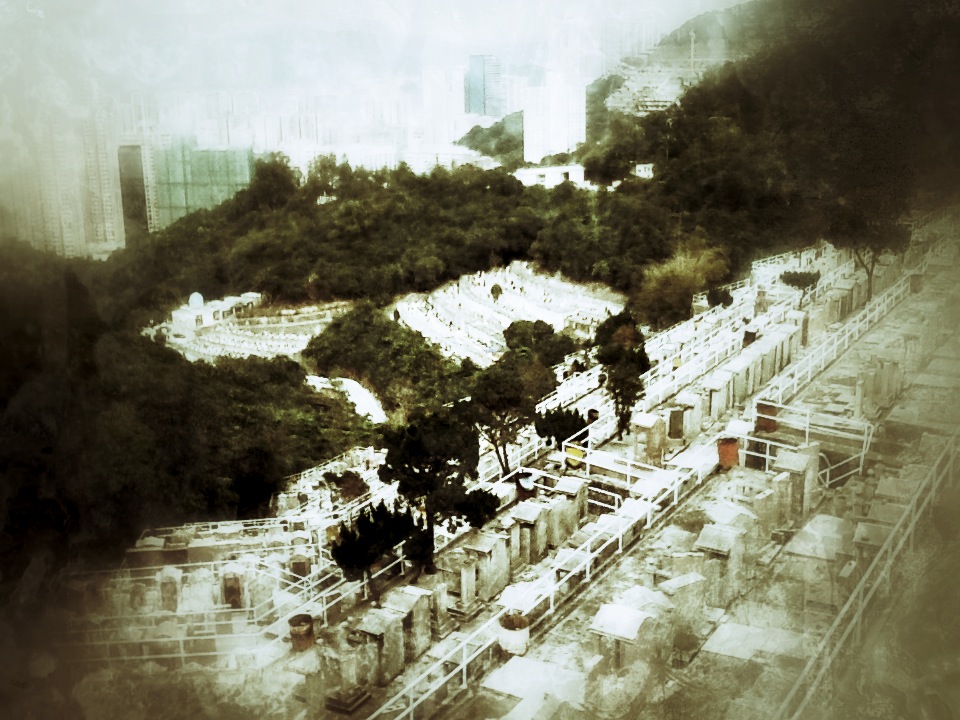
Cemetery
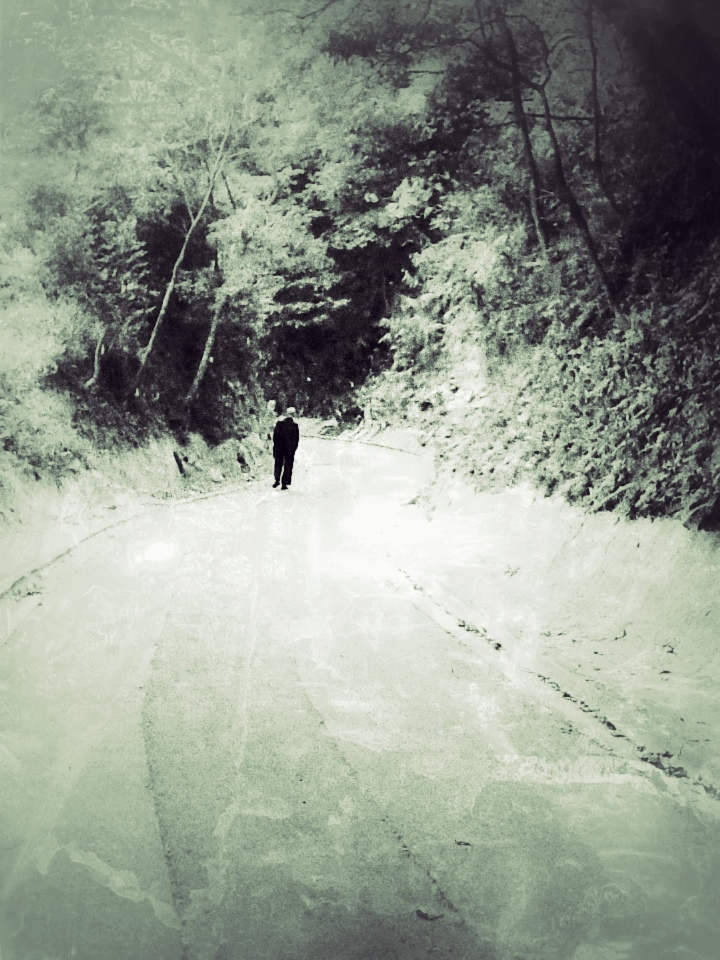
He went first. He said I’d find him.
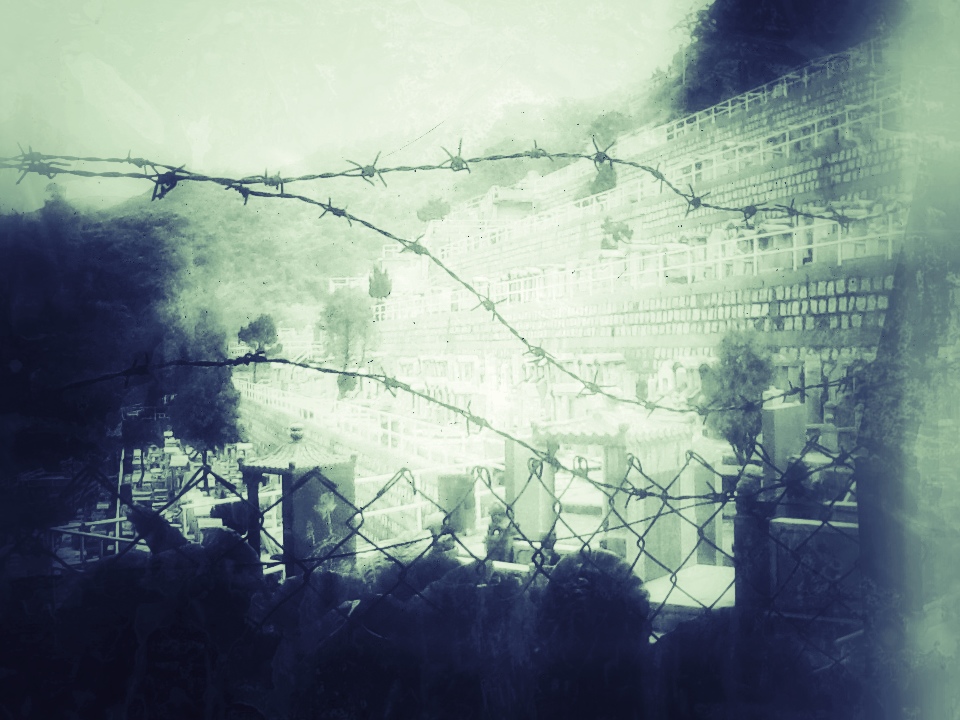
The cemetery built into the mountains is as crowded as the rest of Hong Kong.
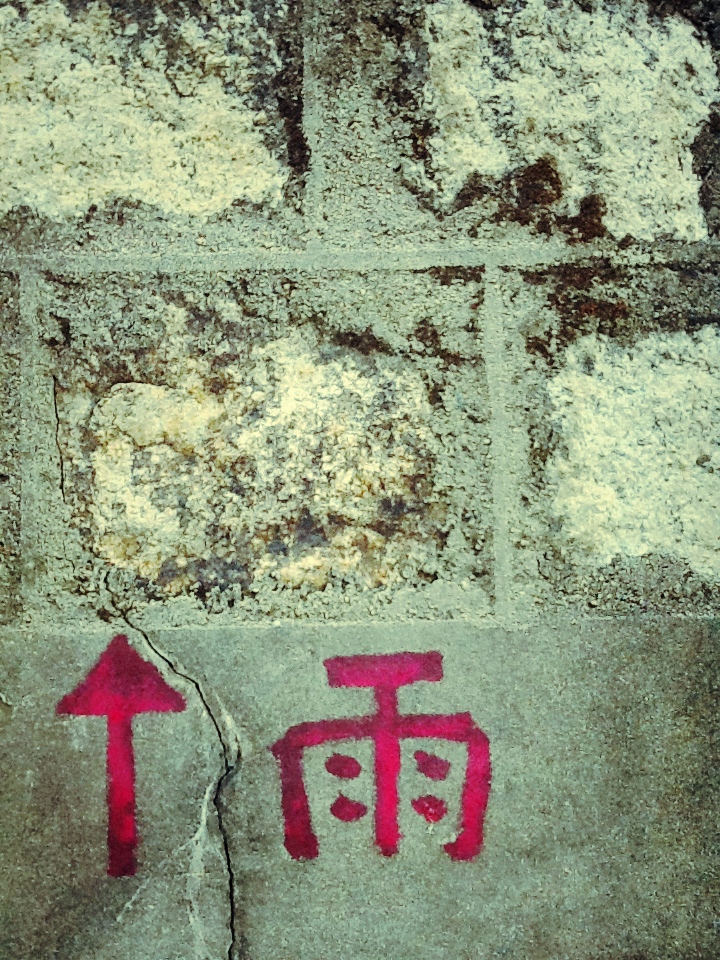
He said he’d meet me here. I see no one.
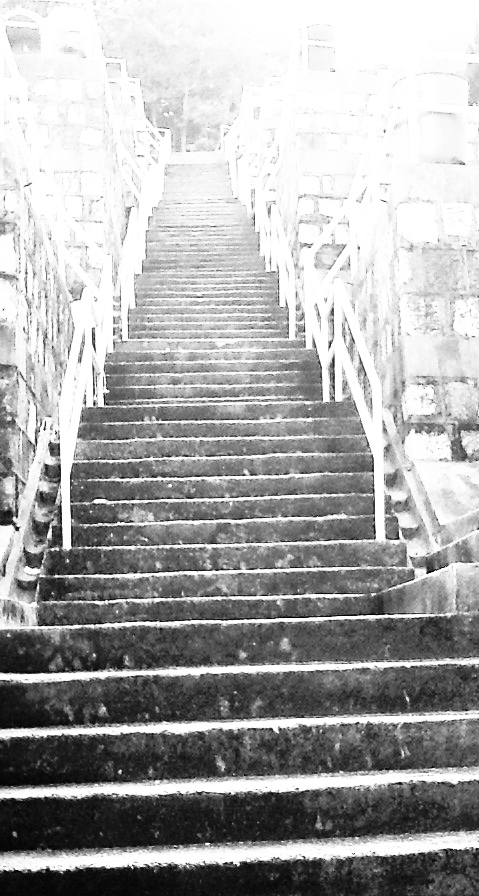
I catch a sound ahead.
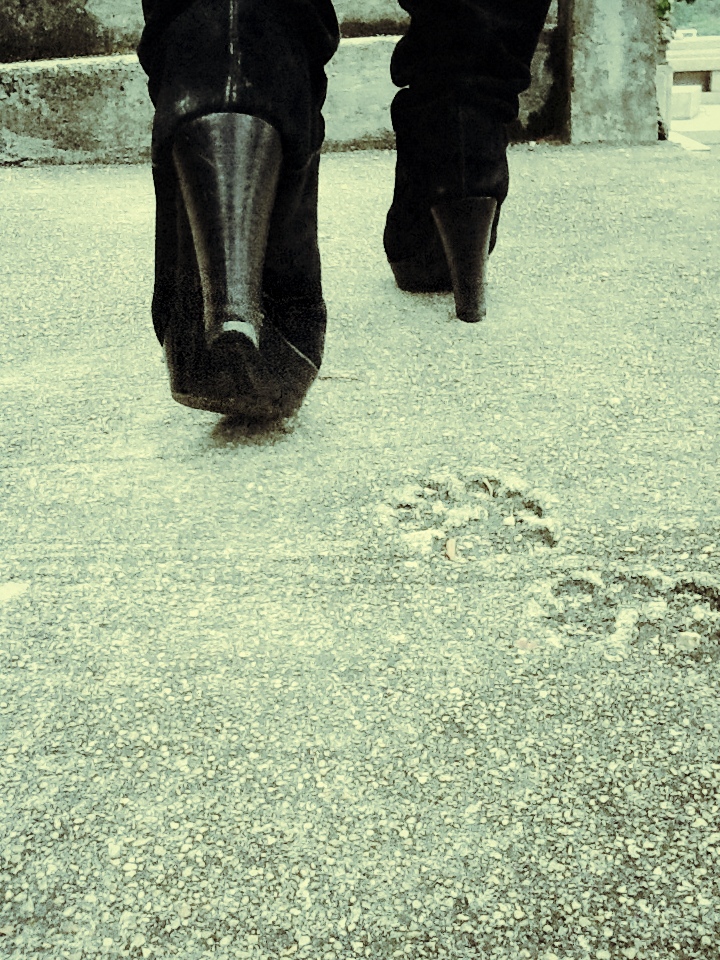
I dare myself to go on, alone.
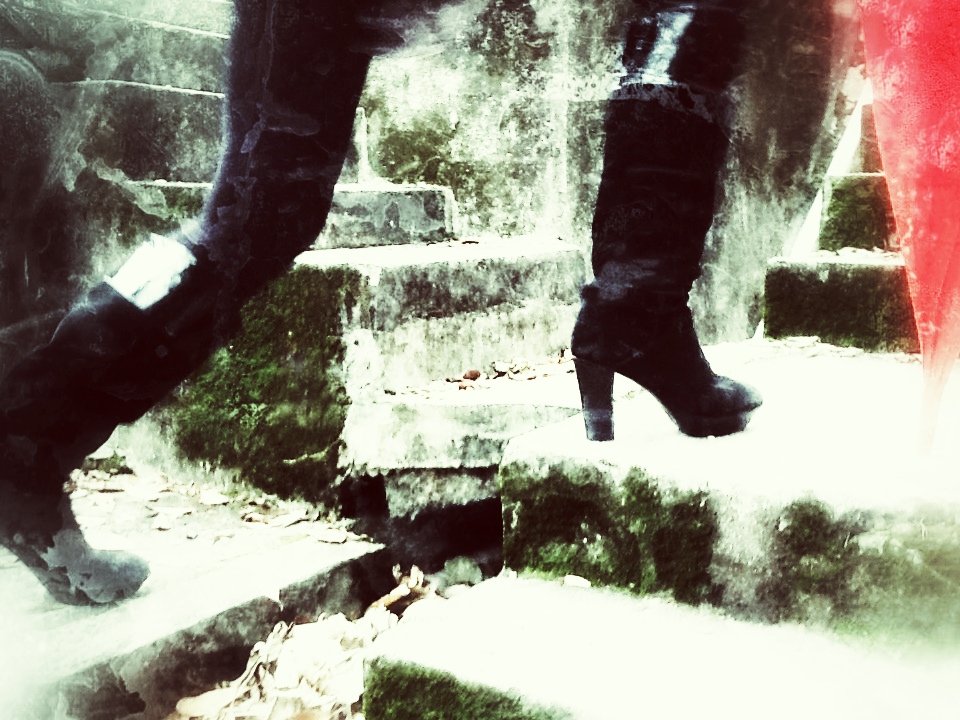
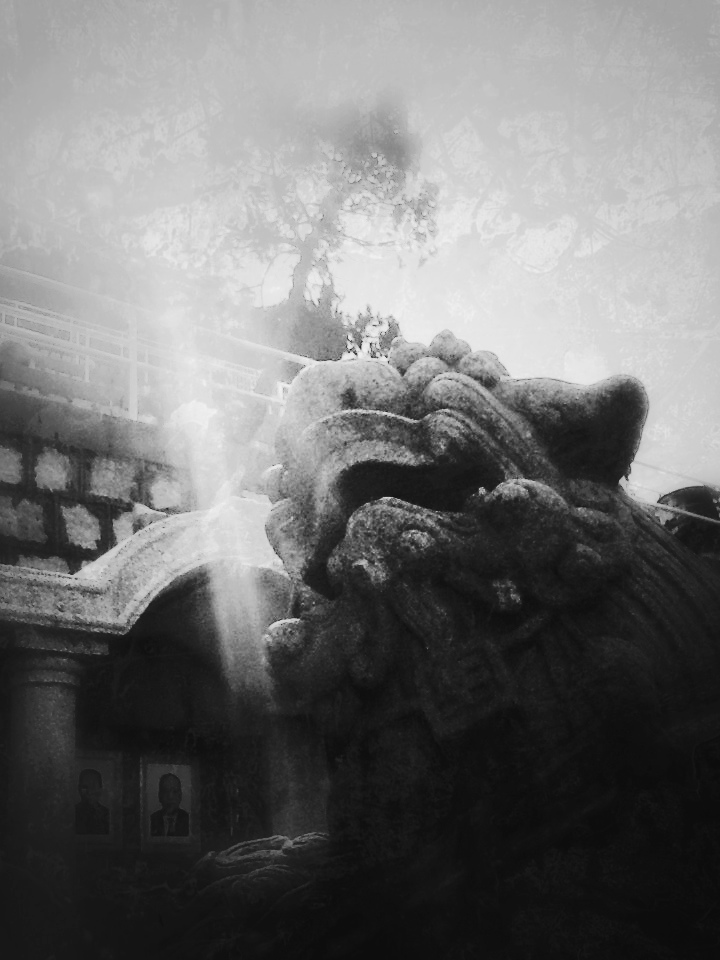
But there are no people here.
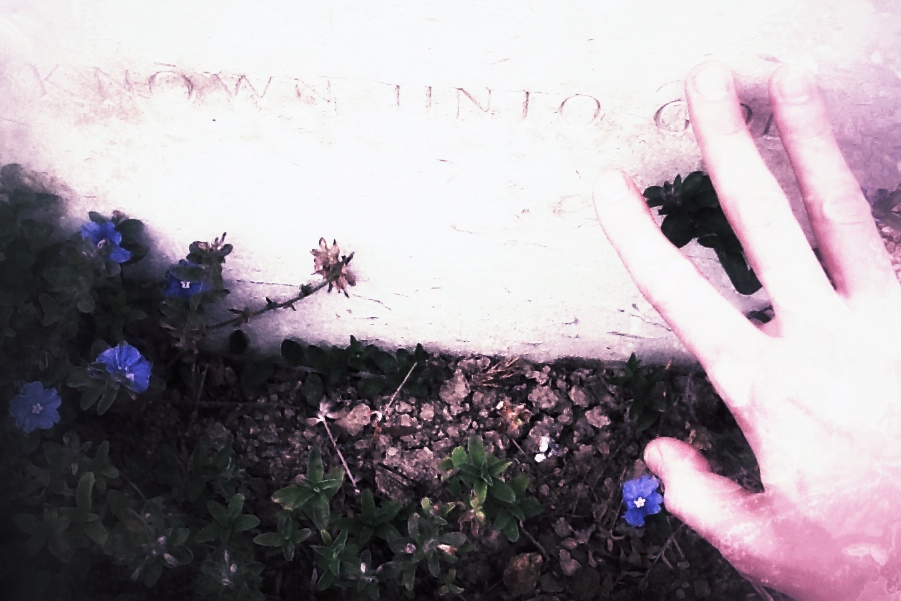
He went first. He said I’d find him.
Artists Bios: Katrina Hamlin and Björn Wahlström live and write in southern China. Björn is the founder of Shanghai-based H.A.L. Literature and of literary journal farenougheast.com. Katrina works as a journalist in Hong Hong Kong and is active with the Hong Kong Writer’s Group and Poetry out loud. They have both been published extensively in east and west. This is their first collaborative piece.
March 24th, 2013 § § permalink
On the theme of Your Very Flesh
All The Reasons I Love You, Even Though Life Is Fleeting And You’ll Just Die And Rot Anyway
I closed his nostrils between my fingers and pulled his jaw down and open. The hole in his face invited me to jump on the muscle that pulsed and twitched in there, squirming against my touch. I took the tongue out and petted it as it writhed in my palm.
“It’s not a sex thing,” I said, looming over him, fingering an eyeball; the nub between his legs agreed, “I just want more from you than you’re giving me.”
“My turn,” he said when I put the tongue back.
I laid down on my back and he stuffed my mouth with the gray sheet, balled from washing, torn from fucking.
We were fair. He had everything out in the open. I hadn’t given him enough, but then, even looking, he couldn’t find much more to take.
Author Biography
Tatiana Ryckman was born in Cleveland, Ohio. She has an MFA in Creative Writing from Vermont College of Fine Arts and writes from Austin, Texas.
March 24th, 2013 § § permalink
On the theme of Groceries and Your Very Flesh.
EVERYTHING FIT TO CONSUME
For a month he was on a freegan kick and would only cook dinners he dug out of the trash. “A lot of food relies on rotting for its best flavor,” he told me. “What do you think blue cheese is? And mushrooms are just really big mold.” The next month he was into exotic foods, a whole menu of absurdities. Pied de cochon: a dinner of pig’s feet, if you can believe it. Haggis: oatmeal and leftovers stuffed inside a dead sheep’s stomach. Balut: a boiled egg with a full-grown chick inside, the milky eyes staring at you when you crack the shell.
I’d gotten used to him bringing home unusual cuisine, ideas he picked up from books or friends or the cooking channels. But I stayed away from the kitchen for weeks at a time, and I usually ate with my eyes closed. The whole thing seemed some harmless test–what of his was I willing to put in my mouth. I played along happily enough. But then he told me he wanted to cook human beings.
He said he knew it sounded insane, but I’m not sure he really heard himself. I’d just come home and he met me at the door, keys in his hands, his sunglasses on. We had laundry to do, two weeks worth of clothes piled in the hallways. The dishes had been stacked in the sink for two days. We were behind on our bills. But he kept trying to turn me back to the car. “It’s something to do with the proteins—they’re our own proteins. Where else to get the nutrients our body needs but from our own bodies?”
He called it a movement, like there were other people as crazy as he was. He said it had been going on for months, that it was consuming the foodie world. His actual words.
It all began when a sustainability nut was learning to butcher his own farm-bought meat. This guy had become comfortable with the slaughtering process but was dissatisfied with the choice of meats. Instead of pigs, he butchered wild hogs. Instead of cattle, he imported camels. Instead of chickens, he raised turkeys and then pheasants and then emu. No meat exotic enough, no idea too new. Then he saw a Dutch reality show, in which the hosts ate small pieces of each other as a stunt. A slice of buttock muscle—a wedge of love handle. A chef sautéed the human meat in sunflower oil and a pinch of salt, my boyfriend said. It was still fairly underground, but my boyfriend was dying to try it.
“Where the hell are you hearing this from?” I said. His ex-girlfriend, he said. We’d talked about this before, her constantly making plays for him, but he insisted it was just about the meat. They used to work in a restaurant together. Side by side, they cooked.
He jingled the keys, and I crossed my arms. I was the one, when we first got together, who’d insisted we talk about our exes, but his stories about her kept coming, every new detail about her a reduction of me.
He rolled his eyes. “It was an email,” he said. “I’ll freaking show it to you. Just some links to some damn recipes.”
“And now, what, you’re going to see her?”
“God, Audrey, would you just come on. We’re going to the store.”
“To what, buy people meat?”
“Maybe,” he said. “Or something, I want to try out some of these recipes.”
“That she gave you.”
Just get in the goddamn car,” he said, and I didn’t want to but I did.
He was sullen the whole drive, and frankly, so was I.
We lived out in the country and faced a long road of silence, so finally I said, “How often do you two talk? Is she texting you, too?”
His hands squeezed tighter on the steering wheel. He wouldn’t look at me. He said, “Listen, I don’t actually hear from her that often, but you want to know the truth? She’s dying. She’s dying and she’s interested in this because it’s a way to help her family with the funeral costs. It’s like donating your body to science, but this way you get paid and people get to eat.”
“You are so full of shit,” I said, and that was it for the rest of the drive.
At the Whole Foods, I thought we’d head straight for the meat counter, but he stopped in the produce section, thumping gourds and holding up leaves of Swiss chard to the overhead lights. “Seasoning,” he kept saying. “Complementary foods.” We weighed out a pound of organic red onions, swung through dairy and selected a range of artisanal cheeses. Then the meat counter, all those slabs of beef and lamb. And a special display, a whole range of packaged steaks with photos on them like the backs of milk cartons. “Edward W,” one said, “car accident.” Another: “Fiona B, donated.” A whole range: “Daniel F, hiking accident. Gerald T, gang shooting. Victor M, physician-assisted suicide.” And by god, there was her face, the image of the woman I’d spent so many hours cutting out of the photos in his photo albums, the face I’d seen on Facebook several times a month, just checking on who she was talking to, how close she was to taking over my life. “Abigail P, breast cancer.” There was a pink ribbon on the package.
“Jesus,” he said. He lifted the package, a cut like a strip steak, stroked the plastic that covered the styrofoam. “I didn’t know she’d been so close.”
Then he held it up to me. “See?” He pointed at the little ribbon.
All I could think to say was, “They’re selling diseased meat?”
The butcher behind the counter heard me. “Oh, no, we run careful checks. Everything certified, everything fit to consume.”
“It’s not like it’s her breasts,” my boyfriend said.
“Actually, that—” the butcher reached for the package and my boyfriend showed it to him. “Yeah, that’s a brisket. Stomach muscle. Abs, you know?”
I felt my own stomach constrict.
“We have to buy this,” my boyfriend said.
I put a fist to my mouth, swallowed, said, “The hell we do.”
“Damn it, Audrey, this is important.”
“I’m not eating it.”
“You don’t have to.”
The butcher had backed away and was slicing prosciutto, but he kept glancing at us sideways, ready to step in and defend the meat. I gave him the finger.
“You want to eat some woman,” I said, “you wait until I die and then eat me.”
“I couldn’t,” he said.
“But you can eat her?”
He looked at the Abigail in his hands, both sets of fingers squeezing it like a bible.
“Yeah,” he said. He looked at me. “Yeah, I can. I need to.”
The dry ice from the meat case smelled sour. Someone bent around us and picked up Daniel F, then put him back and took Fiona B instead. My boyfriend moved aside, nodded at this stranger and smiled, then pushed the Abigail stomach back under my nose.
I couldn’t breathe anymore. All the blood went into my neck and my feet; I wanted to step out of my heels. I started to sweat. I realized I was still dressed from work, my cardigan and sweater and blouse and tank top and bra, and I wanted to start peeling away clothes. I wanted to get smaller, layer by layer.
“Audrey?” my boyfriend said. He looked from me to the meat. He moistened his lips with his tongue.
The butcher worked his prosciutto through the machine slicer, his arm going back and forth, back and forth. I watched the pink meat slivers fall into a folded pile.
Author Biography
Samuel Snoek-Brown is a writer. He’s also a production editor, for both Unshod Quills and Jersey Devil Press. He teaches writing in Portland, Oregon. He lives online at snoekbrown.com.
March 24th, 2013 § § permalink
On the theme of Your Very Flesh
EAGLE CITY
For as long as anyone could remember, the eagle, or one just like it, had lived in a nest atop the neglected billboard on Main Street. There were various myths and origin stories, but nobody knew for sure when or why the eagle had come to their town. It mattered not. The eagle did not require understanding.
Shepherdstown was a hamlet populated by lumbermen and anthracite miners, by Methodist preachers and the wives of Methodist preachers, by shop owners and their homely children. It was a town of knife shops, Bible stores, and diners that served only sandwiches. It was a serious town, where public affection was reserved exclusively for pets. The cemetery made no discrimination between the town’s cats, dogs, or horses and those who owned them. There were six churches to see to the town’s spiritual needs on Sunday, and a bowling alley to get them through the rest of the week. And everyone took the eagle as their unifying totem.
Perched above the billboard, which still bore a faded advertisement for Old Safari jerky meats and pocket hams, the eagle stood as a symbol of the greatness which none of them personally felt, but which they were collectively certain lay embedded beneath their feet, like the anthracite.
They named their high school football team the “Screaming Eagles.” And at games, the home fans would confront the visitors with an eagle scream, though none of them had ever heard the eagle make a noise of any description.
Church services always ended with a prayer for the continued health and safety of the eagle, even at the Unitarian church.
In a pique of civic pride, the town fathers had the billboard beneath the nest repainted with the image of the eagle so Shepherdstown could be reminded of the bird’s sober majesty, even when it was away on eagle business. And when the eagle circled above the town, it was understood that waitresses, truck drivers and school children were allowed to stop whatever they were doing to pay silent homage.
When the anthracite mine closed down, the panicked citizens of Shepherdstown rallied to the eagle, renaming their town “Eagle City,” a gesture to the fickle gods that they were worthy of salvation.
And when the town recovered, the people of Eagle City gave thanks by hosting a dog-and-cat show. They brought their beloved pets to the high school track, flyers for missing pets were exchanged, ribbons were awarded, pies were donated, Methodists befriended Unitarians.
The Dog-and-Cat-and-Pie-Show became an annual event. Candidates for mayor gave speeches, at least two minutes of which were spent describing their eagle-like virtues. The eagle-scream was no longer reserved strictly for football games, but for any moment of great distress or triumph. Any day on which the eagle circled overhead was a good day in Eagle City.
When the great windstorm struck Eagle City, they closed the schools. The roads emptied. The diners sent their employees home after giving them an emergency sandwich. Power lines were downed. By candlelight, the residents of Eagle City listened as the wind beat upon their shuttered windows and locked doors, demanding entry. They huddled together and read passages from the Book of Revelation. Even the Unitarians.
That night, after the wind subsided, the townspeople emerged from their homes. Road signs lay toppled, fallen tree branches littered the roads, but most shocking of all, the eagle’s great nest had crashed down to the earth. Methodist ministers plunged themselves into prayer while their wives served coffee. Lumbermen prepared to climb the billboard to return the nest to its perch. Unemployed miners dusted off their long-dormant helmet-lamps and came running. Homely children circled around the fallen nest. Mayoral candidates raced each other to be first on the scene.
Soon the whole town was assembled around the eagle nest. A couple of firemen shook the nest to dislodge any loose twigs or brambles. And that is when the nest split in half, spilling thirty-four empty dog and cat collars onto the ground. The people of Eagle City picked through the rings of leather and wept openly as they clutched the empty collars to their chests. Nobody was embarrassed, as they wept for pets.
The people of Eagle City dissipated, not knowing what the next day would bring.
Author Biography
Mark Russell is a Portland writer and cartoonist. His work has previously appeared in McSweeney’s, The Bear Deluxe, and Jam Magazine. His first book, God Is Disappointed in You, will be published by Top Shelf Productions in 2013.
