June 1st, 2011 § § permalink
A poem on transportation from Oregon poet Ariel.
Interstate 84
Driving down the road
you’re not going to see her cry:
It’s like a glass house –
all those windows, all
those miles.
Red Car, cruise control engaged;
music will be cranked up,
spilling out of open windows,
drifting behind like bubbles.
When she draws alongside,
she makes sure
it is her hand they see – bouncing,
as if leading the band, shoulders popping
to the beat, hips swinging
the egyptian figure eight in the driver’s seat.
the beat not transferring to the legs,
the feet, the eyes; those parts intent
on where she needs to be, she understands
the purpose of appearances.
She will pace for a mile or two, then
tap that speed, gradually
pull ahead, as if it wasn’t a contest
and you didn’t lose, for she didn’t care
to make it obvious. She will
do this to everyone she comes across
knowing the line that stays
below the radar; her hair
played with by the wind, by the miles that passed,
following from one fast lane
of a highway to another
fast lane of the highway, pulling
to the side occasionally and
letting the losers pass, not thinking
deliberately, not thinking
of the one who passed her by. (What
will they not say
the next time they meet?)
Author Biography
Ariel, who defines herself as a Pacific Northwest Poet, has been writing poetry since 1976. She has been published in several local publications including the Chemeketa Courier & Statesman Journal as well as the anthology “Through Her Eyes.” Her work has been published in the national publication AIM, and Ariel has twice won the Jackson Books Poetry Contest. She is a member of Oregon State Poetry Association, Stayton Second Sunday Series, Silverton Poetry Association, Unshod Quills, and is a board member of Third Thursday Poets. She is a very active participant of the Open Mics & Spoken Word events in Salem, Oregon & in the Willamette Valley. She can often be found writing at her Café Noir in Salem, Oregon. Ariel is a member of the Unshod Quills Writers Collective.
June 1st, 2011 § § permalink
Fiction on the theme of beasts from Shanghai based American author Renee Reynolds.
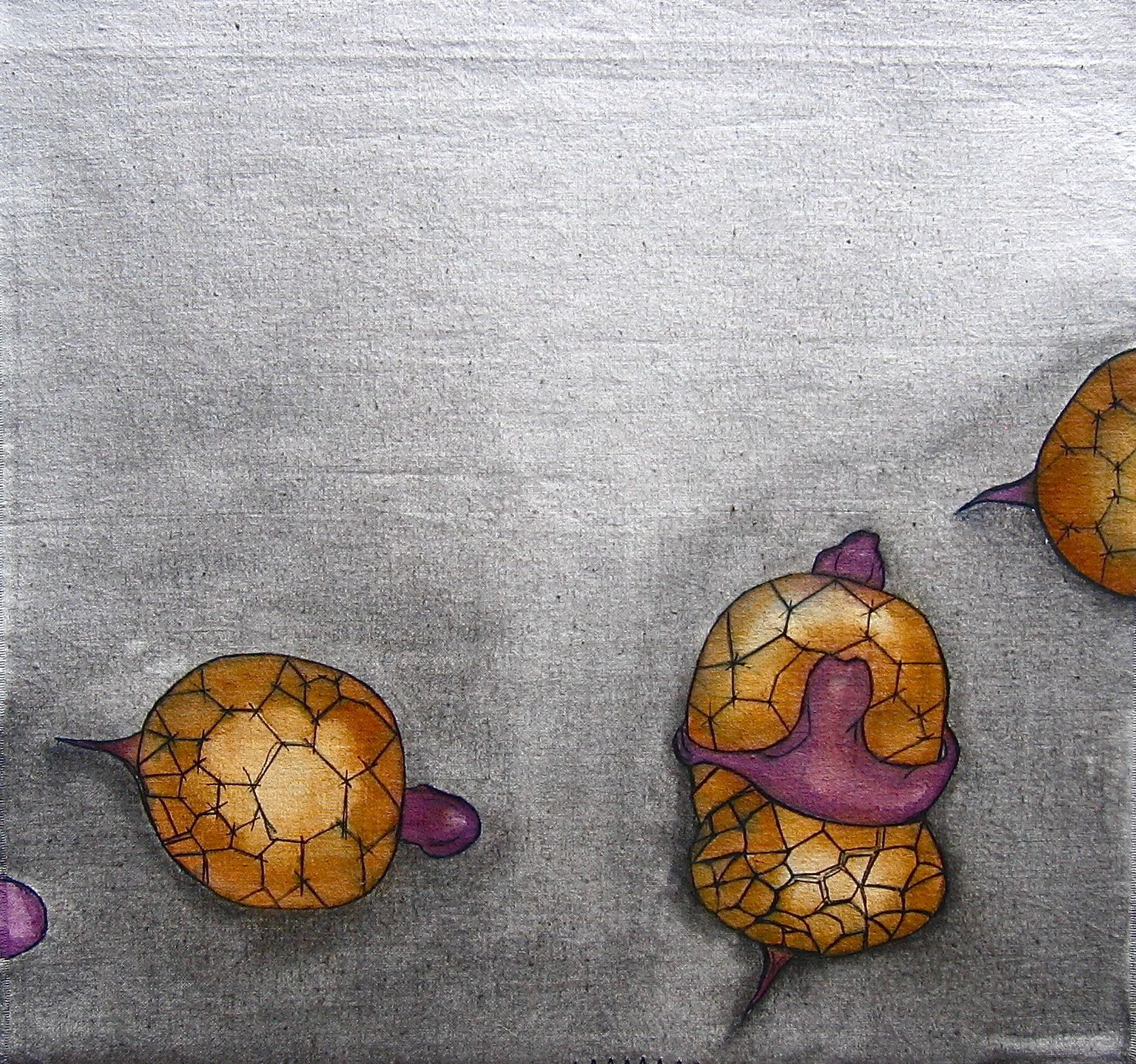
Watercolor, "Turtles," by Renee Reynolds, on the theme of beasts
A Man Called G.
Based on a story that was inspired by a true one
It continues to baffle G., the turns that life can take. He had graduated from a top US MBA program and moved to Shanghai for a high-salaried management position.
Career and life remained lucrative, and so in China, he too remained. By twenty-eight he’d bought a penthouse and by thirty he’d married his Chinese language instructor.
Promotions, bonuses and travel were frequent. There was a mistress in Wenzhou, and then one in Chengdu, and then there were the occasional xiao jie-flecked business weekends.
One day he went to the doctor because he wasn’t feeling well. Nothing conclusive but he was ordered to rest. The hiatus from the office and time home revealed what a shambles his marriage had become.
The divorce got nasty and then it got expensive. Quite fortunately, he’d had his fingers in a big fat Shanghai pie before this domestic unraveling started, and his cut of it came through just in time to help him jump ship all the faster. From then on, he disputed nothing and the ‘I do’ became an ‘I don’t’ just like that.
Back to work he went — a bachelor once again with the spirit of business as usual.
Shortly thereafter, a batch of high-grade lanolin landed in Hamburg to be spread across Europe via various cosmetics by multiple high-profile brands; the shipping end of that lucrative pie that G. had since spent his cut of. Turns out, it was tainted. So toxic that it caused copious cases of blistering rashes; pie in the face.
The probe linked G.’s company to the scandal. His team had overseen the deal between the German-based buyer and the Chinese manufacturer. Bribery, forgery, buck-passing…all standard practice until exposed; rotten pie in the face.
The press would need a monster to behead as soon as possible.
The company offered G. double severance plus a non-taxed informal sum as compensation to be that monster. He agreed.
Time in prison or have the face of his severed head published anywhere G. was spared of. But, his name and career as he’d built them, would henceforth be sunk: his passport was stamped ‘Criminal’ and he’d need to be on the next plane to the US, unavoidable conditions of the secret ‘reprieve’.
Urgings from his mother to stay in the US were followed by a series of job offers from various family members. None would keep him. Four months in the basement of his brother’s Chicago home later, he returned to Shanghai with a new identity. By the end of the following year, G. along with two former colleagues had started their own Quality Assurance operation. Slowly, he rebuilt his life one client at a time. Then he got the lump.
Where his hair ended and his cervical spine began; a tiny nodule of mystery on the back of his neck swelled. It could have been a bug bite, a skin irritation, a small cyst, maybe. It was not.
The first doctor found nothing in the biopsy and sent him home with antifungal cream. A few days later, it was a patch of leathery skin with a small crack at the apex of the lump. He went to see a dermatologist. Another lotion. Before application, G. read the tiny print on the metal tube: “…aloe, vitamin E, arnica, lanolin. Made in the USA.”
One week later, the crack was a scab but the pain in the neck had grown worse. ‘The ache is deep now, in the bone,’ he said. The dermatologist recommended an orthopedic specialist.
Again, nothing conclusive. G. was sent home with painkillers, more lotions, and the card of a therapist specializing in mysophobia (aka germophobia), hypochondria, and other related psychoses common among laowai.
In the therapist’s waiting room, G. read about turtles in last month’s issue of Natural Wonders.
Dr. Lane Fairwell, tells NW how studying turtles has provided new pieces of the evolutionary puzzle.
“Avoidance,” Fairwell explained, “is the most common form of defense in reptiles. With turtles, however, the development of the neck enabled them to turn toward the origin of their fears, thus expanding memory and awareness, changing the pattern of all life-forms to follow.”
G. imagined a turtle waiting to tell a fish about his problems. Then he tucked the magazine under his arm and went for a massage, opting instead for a regimen of hard work, painkillers, whiskey and one-night stands. He was pretty content with this executive decision until a morning somewhere in the third week. He woke flat on his back with unbearable pain and a neck stiff as a board. He reached back with searching fingers to find a tooth-sized thing poking out from the bottom of his skull.
He dropped a handful of painkillers in like peanuts, sucked them down with a swig of whiskey and waited. Once the pain subsided, he pried himself up slowly and with the mirror of a left-behind make-up case, examined his neck in the bathroom. “What the devil…?” It had broken the skin and grown in an upward curve — a tiny, pale-brown horn.
Internet investigations offered a cornucopia of plausible culprits: a bone growth, cancer, soul possession, meningitis, a witches curse, a nightmare or an incredible hallucination…
Again, nothing conclusive.
The pill and whiskey consumption grew almost as fast as the horn. A madness followed; mania. G. surged with an energy that turned him into a dynamo in his three favorite activities: work, sex and ping pong. Satisfied women and a newfound exhilaration greeted him each morning. And business had never been better – rain money it did.
Within a year, the sharp tip of the horn was in-line with the crown of his head. He was like a rhino walking backward. The best tailor in Shanghai fashioned him with fine shirts and suits, each collar with a giant buttonhole. Photographers and journalists came calling. City Holiday, This is Shanghai, Time In…all the local rags wanted a piece of him; pie redefined.
G.’d reached local celebritydom and the top of his game — but it got lonely up there. For the first time, he suddenly wanted his old life back. He considered going back to the US — at the very least, for a visit, to be with mom and the fam.
He had an X-ray just to see. And then he asked about it just to know…could it…could he have it…can it be…removed?
The doctor pinned up the X-ray but G. could already smell the answer, see it too. His spine was fused with it; one could say, it was the top of it, the biggest part of it. Removal would kill him. Second and third opinions said the same.
G. visited family anyway but the description was not enough to prepare them. He had downplayed it. Sure, moments of familial history would be revisited, aspects of the G. they all knew and loved would surface here and there, but this new appendage he wielded with a foreign beastly gait, no one, not even his own mother, could come to accept. Not ever.
G. returned to Shanghai crushed. After swallowing and snorting a plethora of drugs delivered by displaced citizens from nations in upheaval, G. teetered out of his window with nothing, really, to live for. He held out his arm, dropped the bottle of whiskey and decided to follow it.
Headfirst, down, down, down he went, toward the bottom, toward the concrete, toward the blackness of pain’s end.
The weight of the horn pulled him faster into Earth’s core, pushing everything back. G. became a bullet, cutting through the night air as a space-diver falls across galaxies. His head would have crushed upon the pavement if not for the flagpole jetting out of the building; a massive red flag flapping at the end of it.
The horn hooked the pole and swung G. back up into his own window.
With mouth agape and limbs loose as cooked noodles, he slumped there in his box and rested on his horn.
Author Biography
Renée Reynolds grew up in Chicago and Los Angeles. She writes short fiction and paints long pictures. When the voices come, she transcribes as much as possible in case its important but it usually results in a first-person narrative. There are regulars and ones who seem to be just passing through. She is currently writing a novella based on the life of an American business man in Shanghai. She works as a freelance writer and has lived in Shanghai since 2007. This is the first time she has written about herself in the third-person.
June 1st, 2011 § § permalink
The video art, music, direction and lyrics of Portland artist Posie Currin.
On Transportation – “Looking Out.”
Tunnel vision – from Currin’s Hand Cave series, a cave of a hand is fixed over the lens, and the viewer is brought along on a brightly lit trip along roads and highways unlike any others. A journey.
http://www.youtube.com/watch?v=s322T93EZLk&feature=related
On Beasts – “Walking Moon”
An exploration of the archetypal. Future fraction. Woman as god type, and in the afterlife, traversing a landscape – umbrella, cape, cloak; all tools brought from the mortal world and put to brilliant new uses.
http://www.youtube.com/watch?v=LGXhcHnB8Rc&feature=related
On Sonnets – “Four Signature Movements”
A piece centered on working with Gurdjieff dance movement, the Afghan dance lends itself to the introspection of being covered and moving in ancient forms without the luxury of familiarity of environment. Made with Portland artist Rebecca Steele.
http://www.youtube.com/watch?v=q-E7OLyM1-Q&feature=related
Artist Biography
Posie Currin is a Portland based artist who received her MFA at Portland State. Her work includes film, sound, photography, installation and social sculpture. Currin’s methodology in her current work takes liberties with chance and embarks on a kind of journey that has the potential to create new perspectives and understandings both mentally, physically and physiologically. In her current work, Currin is investigating and questioning the balance and tension of things in and of themselves using dance, video and sculpture. www.posiecurrin.com
June 1st, 2011 § § permalink
Nevada’s Ron Rash shares an excerpt on the topic of beasts.
The Color of a Cotton Picker
Soft spring nights scented by flowers and antithetical skies filled with the threat of twisting violence had given way to the Oklahoma sun of an extended summer. The unwavering heat of the mid-September sun seemed to add weight to late morning humidity already pressing hard on the backs of the field hands.
To a child of five, the arched backs of the workers, most dressed in white or light colored clothes in a pitiful attempt to reflect the sun’s brilliance, looked not unlike humped back whales feeding in a sea of brown, brittle shrubbery dotted with the white of their cotton flowers. The fruit of the cotton pickers’ labors often ended up as starched dress shirts on the backs of well-dressed men. The small boy watching the field hands this day wore another garment made from the cotton; a hand-sewn, scratchy shirt stitched from the colored print of a flour sack.
The boy looked up to see how far behind his mother he had fallen. The grown workers and young adults were already well away from him as they expertly worked their assigned rows. The cotton stalks and bowls had dried into brittle, glasslike organic shards waiting to slash and cut poorly protected hands in defense of their soft white flowers.
Young Guthrie Collins marveled that the grownups could pick so much cotton so quickly as they labored under the weight of the long white sacks slung over their shoulders and dragged on the ground behind them. His daddy, whom he was taught to call Mr. Collins, but whom he called Daddy anyway, said the sacks could hold upwards of 100 pounds, and at two and a half cents a pound for the pickers, a man had to stuff every pound he could in that damned sack. Guthrie’s momma, Audrey, didn’t like Mr. Collins to swear, but he knew a lot worse bad words than damn. Mr. Collins seemed to know every bad word ever spoken, especially when he was working on his broken down old Studebaker or talking about his boss.
Guthrie carried his own collection sack for the cotton, but it was not even half as big as the grownups. Completely full it might top out at 30 pounds. Since he weighed only 40 pounds himself it was a burdensome load when full. He inspected the load carefully and fluffed it up as best he could, but try as he might he wasn’t able to make the bag appear full. Mustering as much focus as fear will allow in a young mind, Guthrie decided it was better to have the weigh-in boss tease him about his poor work ethic than to try to catch his momma with such a heavy sack dragging behind him, especially when the weigh-in boss was just a few feet away.
A beaten and ill-maintained old Ford stake bed truck sat just inside a barbed wire fence that ran along side a lonely stretch of Oklahoma state road. On top, the weigh-in boss had already spotted Guthrie and was grinning through his tobacco stained beard at the boy’s hesitant approach. The boss’s voice carried the slow, melodic drawl of a lifelong Oklahoman. “Well, well sonny, y’all don’t seem to have a full bag o’ cotton there, know do ya!” A laugh followed that could only come from a slack-jawed half wit with nothing better to do than torment the helpless.
The boss peered through gray-blue eyes at Guthrie as he bent to lift the boy’s half-full cotton sack to the weigh hook. A series of counterbalanced springs moved the arrow of the circular face to just over 20 pounds. Again came the noxious laugh that the boy hated so much. “Y’all can fluff up the cotton in this here bag all ya want sonny boy, but the scales say twenty and one-half pounds. That’s it … that’s all.” The bully held the sack high above his head as if it were a trophy head of some animal he had just slaughtered.
Guthrie was always in awe of how easily the weigh-in boss could lift the heavy sacks of cotton to the weight hook. Granted his bag was puny by comparison, but the men’s sacks often went over 100 pounds.
He felt his clothes begin to ‘itch’ him as he adjusted them in all the tight places… under the arms, in the crotch and in the seat. He felt a welcome breeze kick up the front of his light blond-brown hair and cooled his forehead as the sweat of his brow evaporated. Tears were trying to form in Guthrie’s bright, dark blue eyes but he choked them back.
This time the boss’s voice boomed at Guthrie. “Go on now boy, you’re a startin’ to bother me. Go find that injun mother of yours afore I tell your daddy about this half empty sack you toted up here.”
“My momma ain’t no injun. And she ain’t that bad word you called her yesterday, neither.” Guthrie struck a defiant pose in defense of his mother but his bravado gave way to the indignity of a runny nose, which he promptly wiped on the tail of his shirt.
“You back talkin’ me boy?” bellowed the fat weigh-boss, scaring the boy almost to tears. “If’n I say yore momma’s a nigger and a injun, then that’s the way it is!”
Guthrie felt tears running down his cheeks and a lump forming in his throat, and the truth being self-evident, he was deathly afraid that the boss man would jump down off that old Ford truck and snap his head off his shoulders. But he was committed now, and he was going to defend his momma to the end. “My momma says she’s a woman of color. She says she’s part African, part Cherokee Indian, and Irish from the waist down.” Guthrie had no idea what the last part meant but it sounded important.
The boss man had had enough. He was afraid that the others standing close by would hear him losing an argument to a five-year-old brat. He tossed the young man’s cotton collection sack back at him with so much force that he lost his footing and fell hard on his butt in the bed of the old truck. “Get the hell outta here boy afore I take my belt to yer backside.”
Guthrie was knocked to the ground by the force of the light bag hitting him in the face and chest. As he pulled it from his eyes the first sight he caught was of the red faced boss man flat on his butt, and all the people around him trying to restrain their giggles. Realizing he was now in real danger, the boy ran. And ran. And ran. He was looking for his momma Audrey. As he closed in on the pickers at the far end of the field he looked frantically for her. Then he spotted her white trousers, white apron and slim legs standing just behind him and on his right. He turned and leapt at her and felt her strong arms carry him up to her breast. He buried his head in her bosom and cried softly, “The boss man called you an injun today, but I tole him you was a woman of color just like you tole me.”
“Boy, I love to hold on to ya like this, but I ain’t your momma … she’s right over there.” The woman laughed loud but affectionately and pointed to Audrey for the frightened boy. “And I don’t knows nuthin’ bout this woman of culah bi’ness.”
Guthrie was mortified and panic-stricken, still trying to beat back the tears as he fought furiously to escape the strong woman’s grip. A funny thing though, even as he fought to get loose, Guthrie was drawn to the woman’s big smile filled with bright, white teeth greatly contrasted against her brown-black skin. As the fight ebbed from him he was beginning to be reassured by her throaty laughter and pats on his behind.
Eventually the tall woman let him down, and with another pat on his small butt, scooted him towards his momma. He would remember her warm touch and rich laughter for the rest of his life.
Seeing his momma for real, the boy let loose with genuine tears and some unabashed wailing. “Guthrie child, y’all better hush now. Mr. Collins will beat you sure if’n he catches you cryin’ like this.”
She held him tightly and smiled at the other women watching the scene.
RR
Author Biography
Ron Rash is an occasional writer of fiction and non-fiction stories. Ron resides in Henderson, Nevada with his wife Joanna. He has authored several short stories and novels, both published and unpublished. He enjoys his three grandsons and fly fishing, and loves to spin a good yarn.
June 1st, 2011 § § permalink
Poet X. Joloronde on the theme of lipstick
El Paso Valentine
earlier i spent the day hiking
alone in the mountains
a woman and the wilderness
i felt empowered and brave
i opened my arms
and let in the world
later he telephoned
and reneged on the life we built
in favor of no discussion
and really bad timing
and my bravery crumpled to the floor
and when the shadows finally covered the room
i knew that i could stay there forever
so i got up
and i put on a very short skirt
and very high heels
and very red lips
and as i walked out the door
i realized that on any border
bravery is in the eye of the beholder
Author Biography
x. joloronde is a west coast girl living and writing in new england.
June 1st, 2011 § § permalink
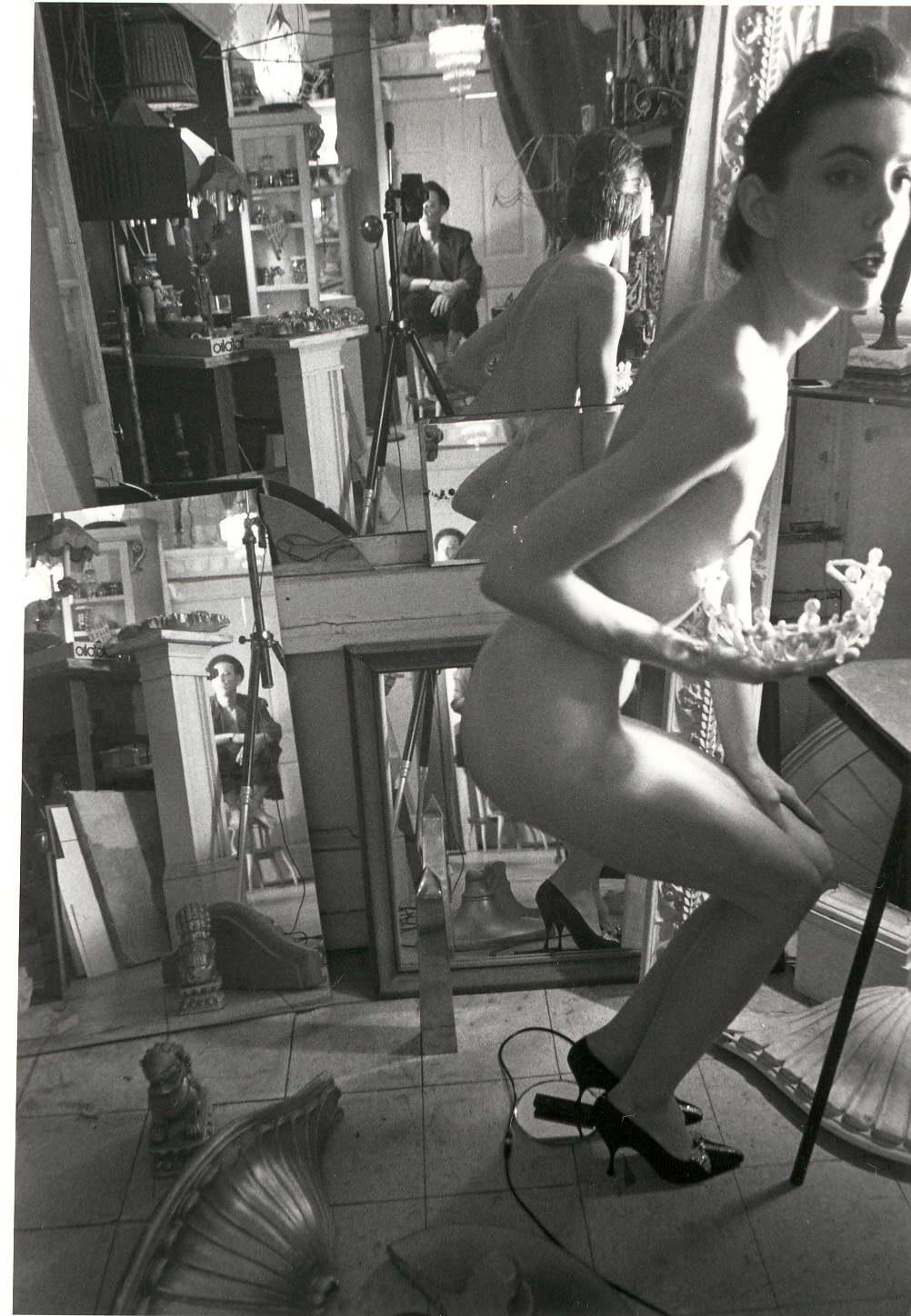
Unshod Quills’ first featured artist, Las Vegas, Nevada photographer Eva Steil shoots here
on lipstick, mirrors, beasts and When We Two Parted.
Please click each photo once, and then again on the following page, to see in greater detail.

Eva Steil, "Liets." Photo taken January 12th, 1989 in Atlanta, Georgia. On the theme of mirrors.
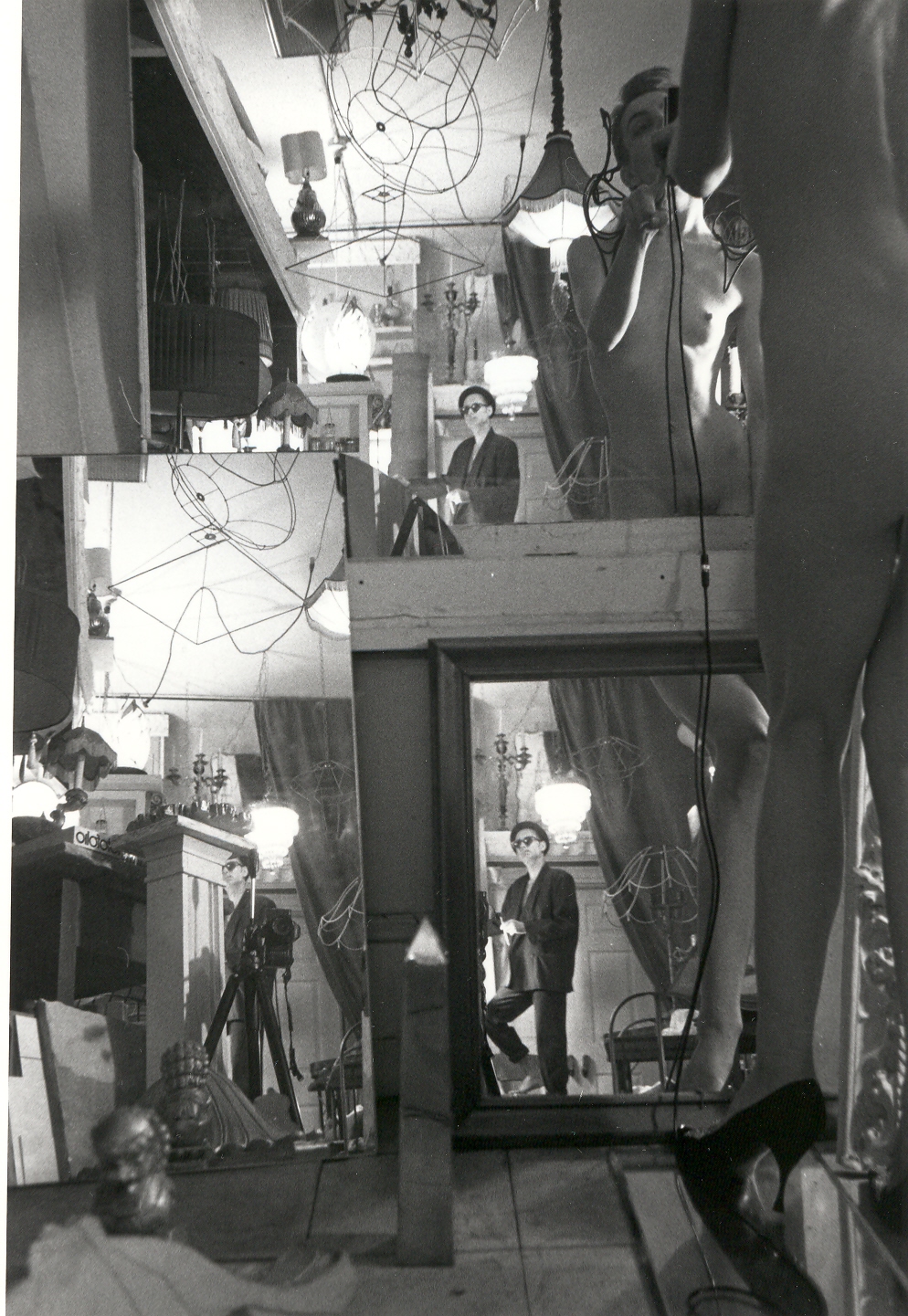
"Liets 2." Eva Steil on the theme of mirrors
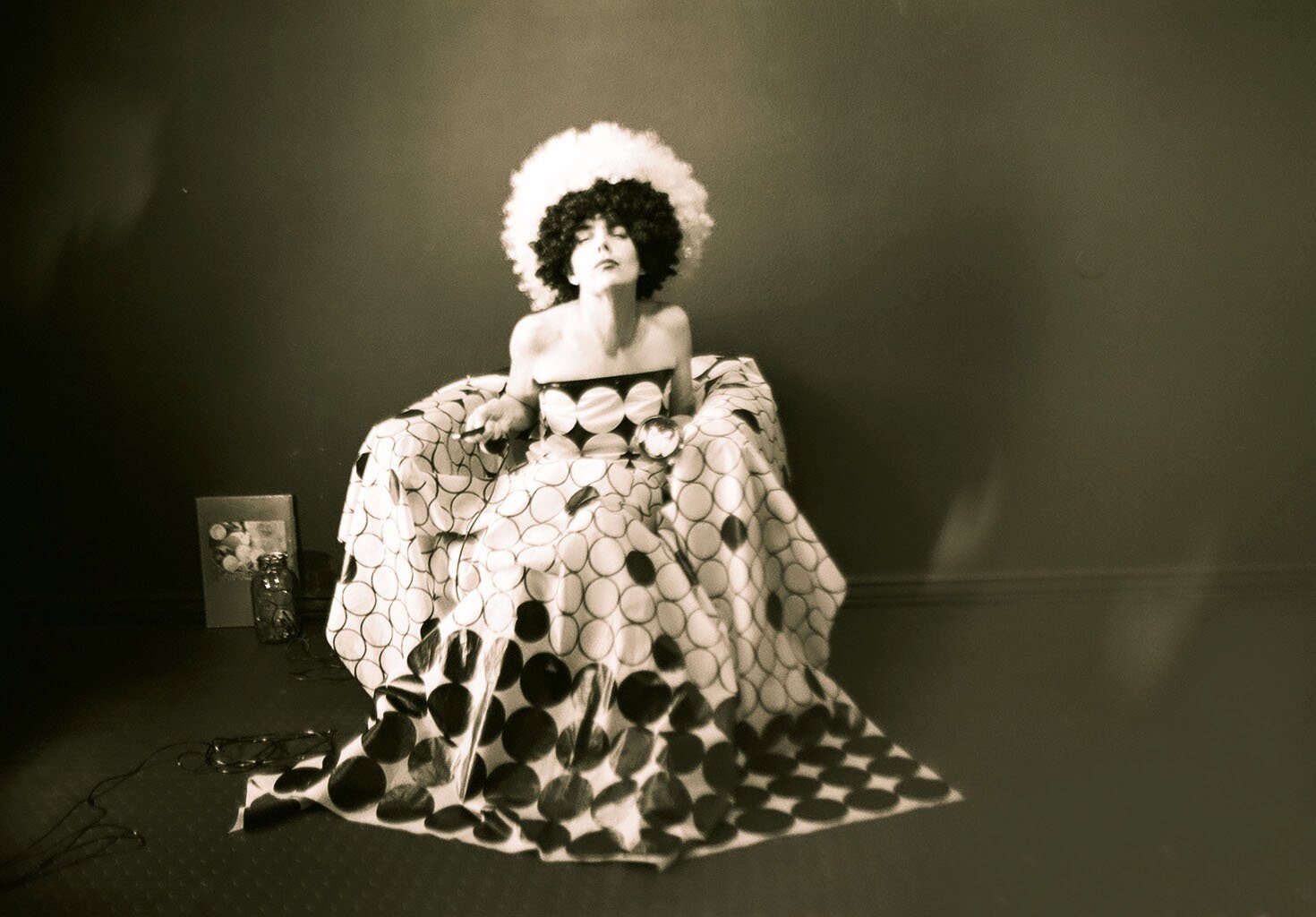
"Eve 2" - self portrait of Eva Steil on the theme "When We Two Parted"

"Lip Blotter," Eva Steil. On the theme of Lipstick
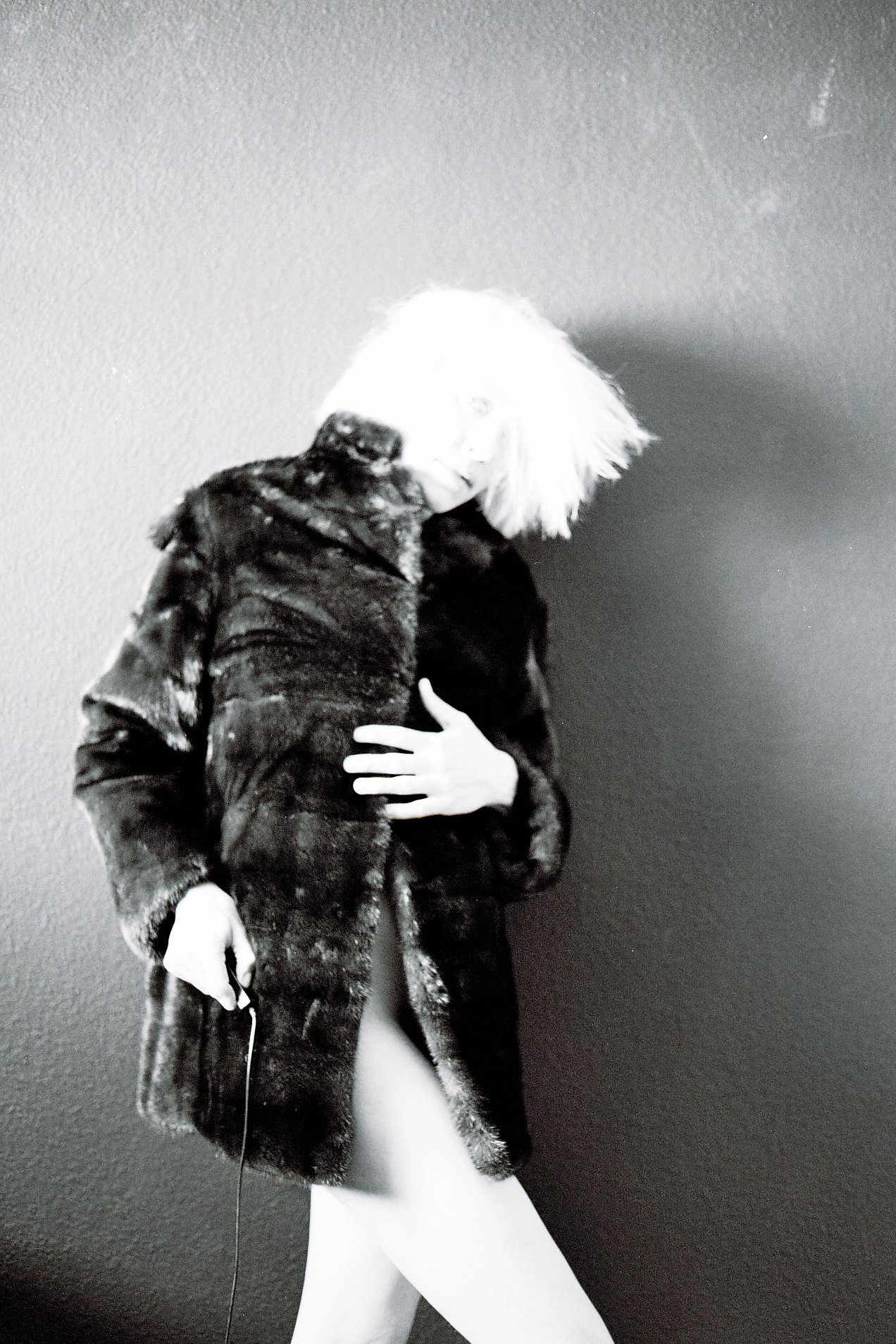
"Tara in Fur," Eva Steil. On the theme of beasts
Artist Biography
Eva Steil is a Las Vegas based photographer best known for at once intricate and stark self portraits and for her portraits of other artists. Eva utilizes digital photography, but the bulk of her work has been done on film, and she continues to work in this medium today. A member of the Unshod Quills Writer Collective, Eva also writes poetry and lyrics. Eva wants to make your art gallery a Ground Zero for an exhibit. She can be found here.
June 1st, 2011 § § permalink
Two poems from hobo James H. Duncan.
Reflections
– on mirrors
now I pace the highway like a real ghost might
tipping the flask to my lips one last time
a quick shot of relief and then down into drive,
a shift, a release of the wheel
in the dark I cannot tell how the bed becomes a highway slab
my eyes never know, they flutter under skin
paper thin to the moon, reflecting now against my
pavement blood, remembering my
knees against the backs of your long gone legs
wishing for reflection in the traffic headlight drone
JD
12 gauges of remorse
– on When We Two Parted
silence stains the lonely shoes
worn before the soul fell through
cat’s eye wallpaper, honest, peeling,
ever so slight of hand
a flick of the belt and a hush
from the stair, as the moon hides beyond
candle-lit nebulous reasons fly
from the roof into tomorrow’s tomorrow
reality is a loaded shotgun starry
night, hung beside the mirror on the wall
triggers painted red and a cat’s eye reeling,
ever so slight of hand
JD
Author Biography
James H Duncan is a tramp, a gentleman, a poet, a dreamer, a lonely fellow, always hopeful of romance and adventure. The editor of Hobo Camp Review, James considers himself a student of the road, where you’ll find him in late-night diners, local dive bars, and wandering train station platforms minding his own business. Apt, Red Fez, Reed Magazine, Slipstream, Poetry Salzburg Review, and The Battered Suitcase, among many others, have welcomed his work. More here.
June 1st, 2011 § § permalink
The poetry of New York City’s Jillian Brall.
One Afternoon on First Avenue
– on Lipstick
You are leaning against nothing,
standing beneath the awning of a closed store,
its large metal door, rust and turquoise colored,
oceanic, sealed from top to bottom.
You don’t lean against it because “What if
someone opens it from inside?”
Well, what if? Will you fall?
Are you afraid they’ll be insulted
by your uninvited spine and shoulder blades
using their exterior as a vertical bed?
Several stories above your head
a woman’s old face hangs out her window.
It just began to rain.
She extends a potted plant with her wrinkled arms
and it drinks for free.
Every shower is ladies night and every plant is a lady.
Some people were prepared and others weren’t.
The drops sneak up like a real creep.
It’s going to smudge everyone’s looks into other looks.
Your red lipstick isn’t waterproof. It isn’t anything proof.
It’s proof that you’re broke (because it’s cheap).
It’s expensive to be broken without any health insurance.
From a block away you see a man wearing glasses,
walking down the street in your direction.
As he passes in front of your body you see
his glasses are missing their limbs,
no plastic or metal is wrapped around his ears.
This only became evident when you saw his profile.
They are balancing on the bridge of his nose
like the sun above the Brooklyn Bridge,
which you can’t see from where you’re standing,
but you know it’s there. At least,
news hasn’t reached you that it’s missing.
It was there in your dream, bending beneath the midnight sun.
If anything had changed you assume you’d hear screams.
It’s a safe assumption.
What idea keeps his glasses from falling to the pavement?
If you take your eyes off the two wet circles of glass
will you be the reason they plummet and crack?
A little girl sleeps on the shoulders of her father,
her head resting in the dripping hair of his crown.
She wakes up because the sky is falling,
like in the book he read her before bedtime.
You know now your rain boots have slices in their skin.
The rain water gets in, and your socks are getting soaked.
And despite cold feet, you know this is a great position you’re in.
You’re waiting beneath an awning for a call.
He wants you to be available and you said you would be.
You want to be available.
JB
The Beast is an Angle of Light
– on Beasts
You saturate the frame and therefore the frame is empty.
You wear the accessory because you want the real thing.
You wrap yourself in wires because you want to be connected to a motherboard.
You wear big glasses because it’s very sexy to need correction.
You pose with your arms in the air, but you don’t really want to be lifted.
How far back can you stretch? Can you apply lipstick with your tailbone?
Can you pump perfume with your eyelids? Are you that gifted?
Your toes cram into hoof shapes because somewhere someone likes licking pigs.
You don’t want to miss out on the affection. You don’t want to discriminate.
Don’t be old fashioned. Don’t antiquate.
Your real mother is bored because she remembers when kneecaps were private.
Someone always wanted to scar them with a lick.
She always worried she’d have to scream and kick.
Nothing is threatening when everything is a threat.
Don’t believe the father of lies? Wanna make a bet?
The bass is so loud and heavy it tricks my ventricles.
I don’t want my ventricles to be tricked.
I feel very weak and sick.
We say thank you to this holey gift:
a decision engine, so we don’t have to pick.
I don’t need results in under 3 seconds,
but they say the babies beckon.
Here’s a collar: hurry up and stick your neck in.
How young is too young to try the belt trick?
Don’t be judgmental now, he’s just experimental.
He’s very advanced. Very advanced.
White eyeliner helps give his girlfriend that animated look.
Her crotch is made of megapixels and smells like customizable candy.
She’s so hot. SO HOT.
She straightens every curl and thins whatever’s thick.
I know the tricks that make steam appear, the father of what’s slick,
right before all the skin blisters off,
thanks to special effects and the angle of light.
JB
Author Biography
Jillian Brall received both her BA in Creative Writing in 2004 and her MFA in Poetry in 2009 from The New School, in New York, NY. She is a NYC certified Teaching Artist, currently living in the Bushwick area of Brooklyn. She is co-creator/co-editor of the online poetry journal, Lyre Lyre (lyrelyre.com). In 2009, she self-published a limited edition book of poems, Wet Information, under ZoeWo Press. She is a saxophonist, as well as a visual artist, focused on collage, drawing and painting. Poems have recently appeared in The Best American Poetry Blog, Praxilla Journal, Connotation Press, 6S: The Mysterious Dr. Ramsey, Esque, The Tower Journal and The Portable Boog Reader 5, and forthcoming in Ping Pong Magazine. Several of her collages can be seen in issue 12 of Pax Americana, as well as featured on The Best American Poetry Blog, and have been used as cover art for several electronic poetry books published by Scantily Clad Press.
June 1st, 2011 § § permalink
Morag Dhu on lipstick.
Mendacity Red
“Hey, what’s that shade called?”
“Mendacity Red.”
“Perfect for a lying bitch like me! I’ll take it.”
The starchy beauty robot looked at her blankly and rang up the sale, throwing in some old lady cream, thanks Miss.
“Hey, it’s me. Do you want to grab a bite?”
“Where? This metropolis is such a small town, as we’ve discovered.”
“I know. Let’s wander. We’ll find something. Meet me in The Village at 9, Bleecker and Sullivan.”
“Alright. I’ll be the fat man smoking two cigars.”
“Hey, it’s me. What time will you be home?”
“Oh, not for a few hours. Go ahead and eat.”
“Why, what are you up to?”
She’s up to 8. Like candy covered almonds, once she starts …
One, she loves a lot; one she loves a little, 2 she can’t stand, and one scares her.
The other 3 are inconsequential.
She just feels them on her tongue; that too many candy covered almonds roughness and sugar overload feeling. Enough.
Author Biography
Morag Dhu is an Eastern U.S. seaboard songbird on the fly. She is a member of the Unshod Quills Writers Collective.
June 1st, 2011 § § permalink
Peter Halasz, acclaimed painter and artist in residence at the same Oregon farm which the editor of Unshod Quills calls home, offers four luminous paintings on the theme of sonnets.
Please click each image to see in a larger size.

"In the Dim," oil on linen, 72x36, Peter Halasz 2009 - on sonnets

"Leah," oil on linen, 65x36, Peter Halasz 2010 - on sonnets

"Song for Erebus 5," oil on linen, 47x39, Peter Halasz 2010 - on sonnets
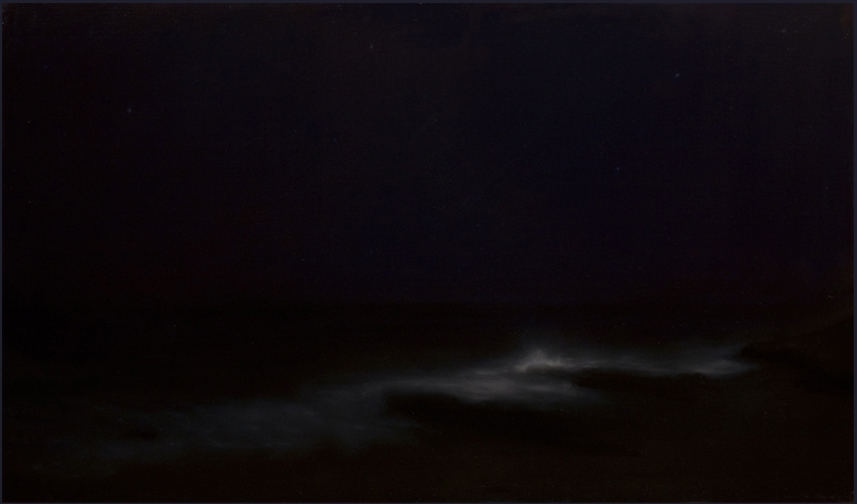
"Songs for Erebus 1," oil on linen, 20x34, Peter Halasz 2009 - on sonnets
Artist Biography
Autodidact painter Peter Halasz was born in San Diego, California, in 1974. His paintings of primeval and numinous landscapes, haunted portraits and figures amidst ghostly vistas have been shown in galleries in New York, Los Angeles, San Diego, and in Turin, Italy. He is currently an artist in residence at the former De Graaf flower farm in Sandy, Oregon and is occupied with painting the foggy morn… www.peterhalasz.com